

Knowledge creates protection
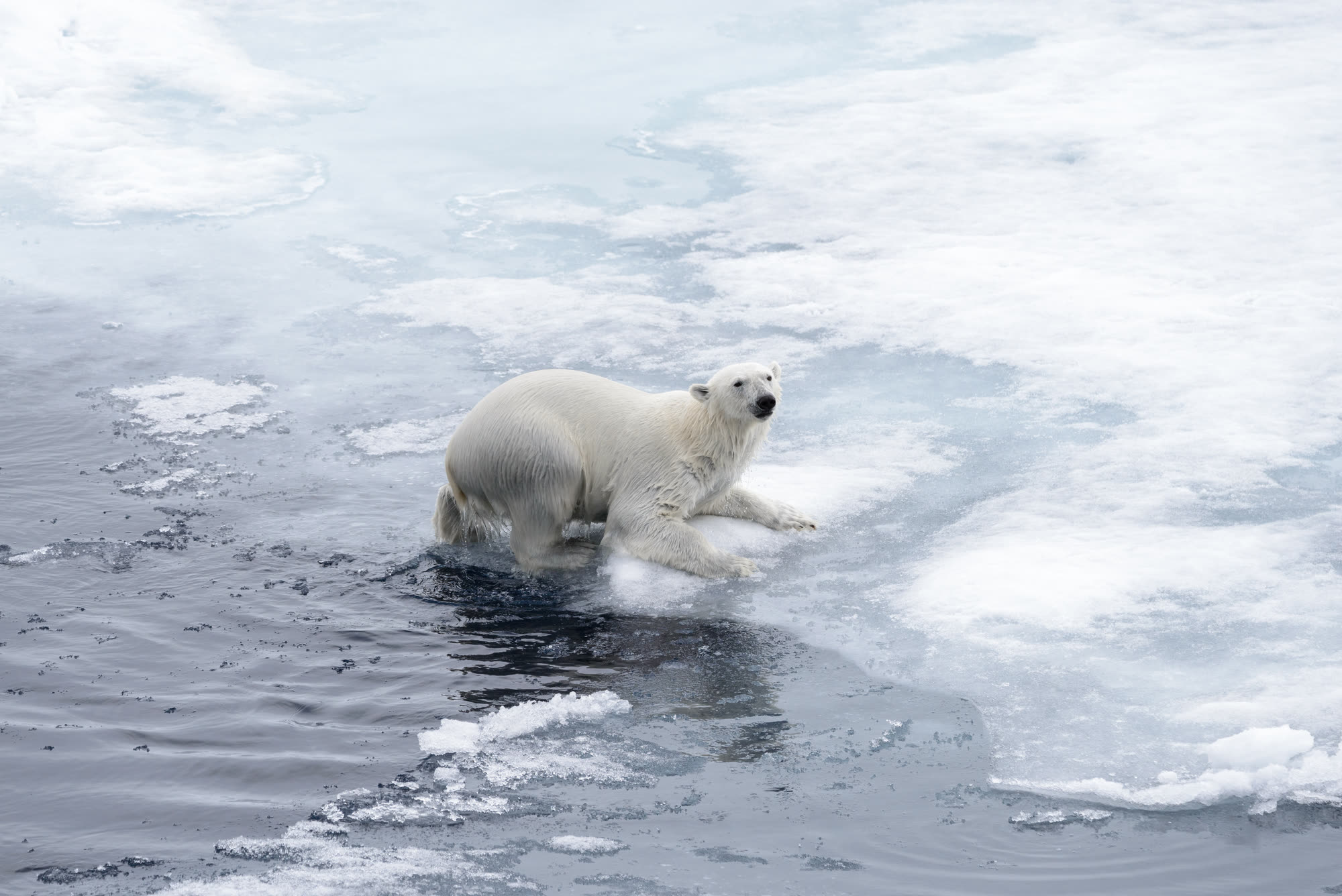
Polar bear research: how populations are counted
How many polar bears are there, where do they travel, how is their condition changing? Answers come from fieldwork, satellite data and the knowledge of Indigenous communities.
10 of 20
subpopulations without enough data for a trend
2013
year of the last estimate for Baffin Bay (2,826 animals, genetic)
1997
year of the estimate for Lancaster Sound and Norwegian Bay
123
adult females with tracking collars in a Hudson Bay study on sense of smell
Methods
Four ways to survey polar bears
No single method gives the complete picture. Researchers combine several.
Satellite collars
They record migration routes. They are used only on females, because the neck of males is wider than the head and the collar would slip off. Video collars have also been used to observe how polar bears hunt.
Ear tags and capture
Marked animals can be recognised again. This gives survival, age, body condition and movements.
Aerial surveys
Animals and tracks are counted from aircraft and helicopters, for example in Hudson Bay and Foxe Basin.
Genetic surveys
A biopsy dart takes a small skin sample without sedating the animal. Individual animals can be identified from their DNA and the population estimated.
Example: Baffin Bay
Counting without disturbing
For the Baffin Bay subpopulation (Canada and Greenland), an estimate of 2,826 animals was obtained for 2013 (likely range 2,284 to 3,367). It was based on a genetic counting method: from the skin samples it was possible to tell which animals had been sampled more than once – and from this the size of the population follows.
Such methods are less stressful for the animals than capture with sedation. They deliver only estimates with a certain margin of error, however. The estimates from the 1990s and 2010s are also not directly comparable, because the surveys were designed differently.
What research has shown so far
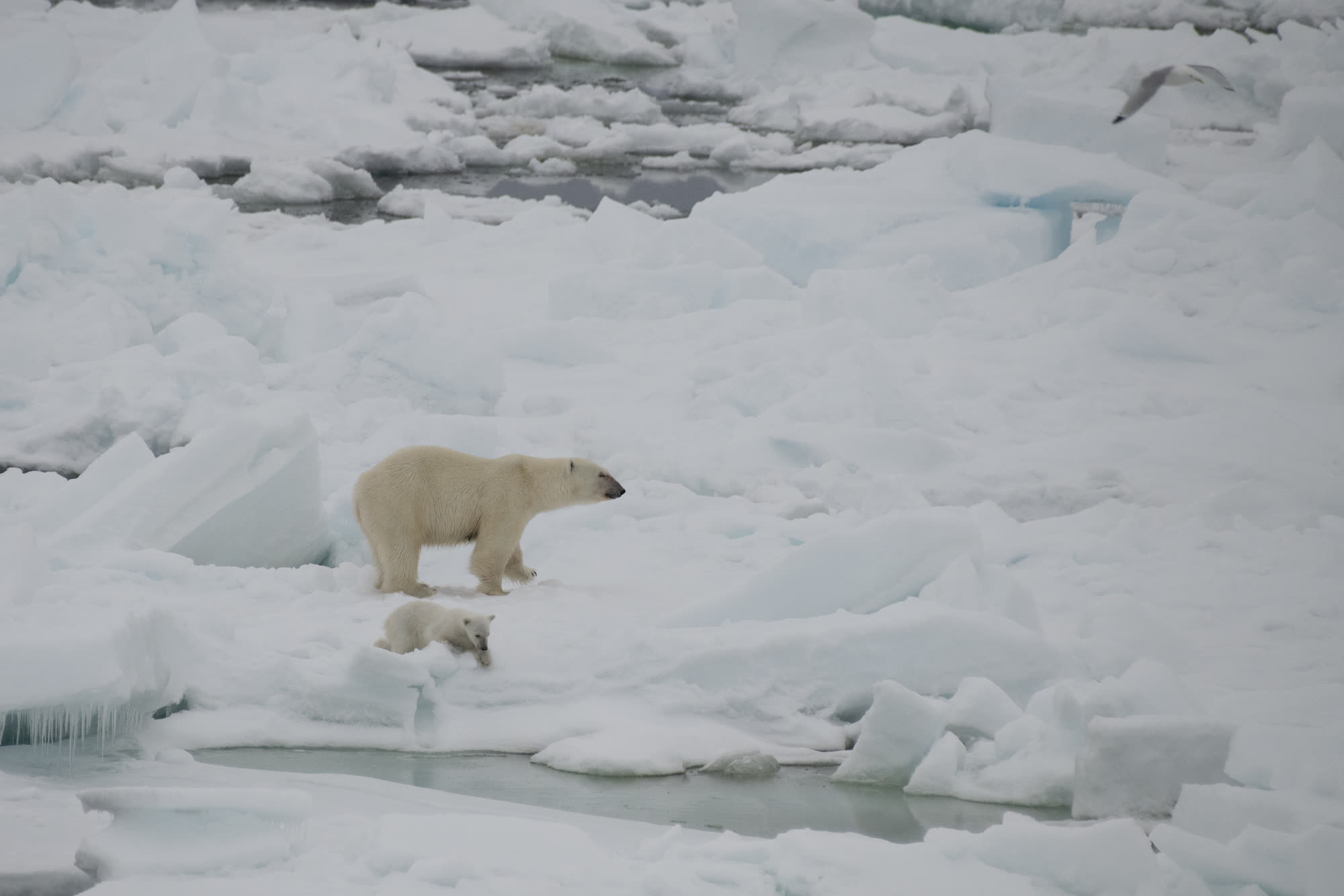
Six findings that changed the picture
High energy needs
Video collars showed that polar bears need about 1.6 times more energy than previously assumed. A female has to catch an adult ringed seal about every 10 to 12 days in spring.
Smell and wind
Polar bears prefer to search for prey across the wind, especially at night in winter. Stronger wind makes smelling harder.
Fur and ice
In 2025, researchers showed that the sebum of the fur makes ice stick poorly. This could be interesting for materials research.
Development and genes
A 2026 review (Ecological Monographs) analysed more than 50 studies. According to it, polar bears are getting smaller and genetic diversity is falling in many subpopulations; genetic adaptation to climate change has not been shown so far.
Surprise in Svalbard
A long-term study (Aars et al. 2026; data from 1995 to 2019, 770 bears) found that the body condition of polar bears in Svalbard improved after 2000 despite the loss of ice. The researchers name seals being more densely concentrated and new prey as possible reasons.
But: critical threshold unknown
How much ice polar bears need at a minimum is not known. The study points out that polar bears depend on sea ice for a minimum time each year, but the critical threshold is still unknown.
Inuit knowledge
Working together as equals
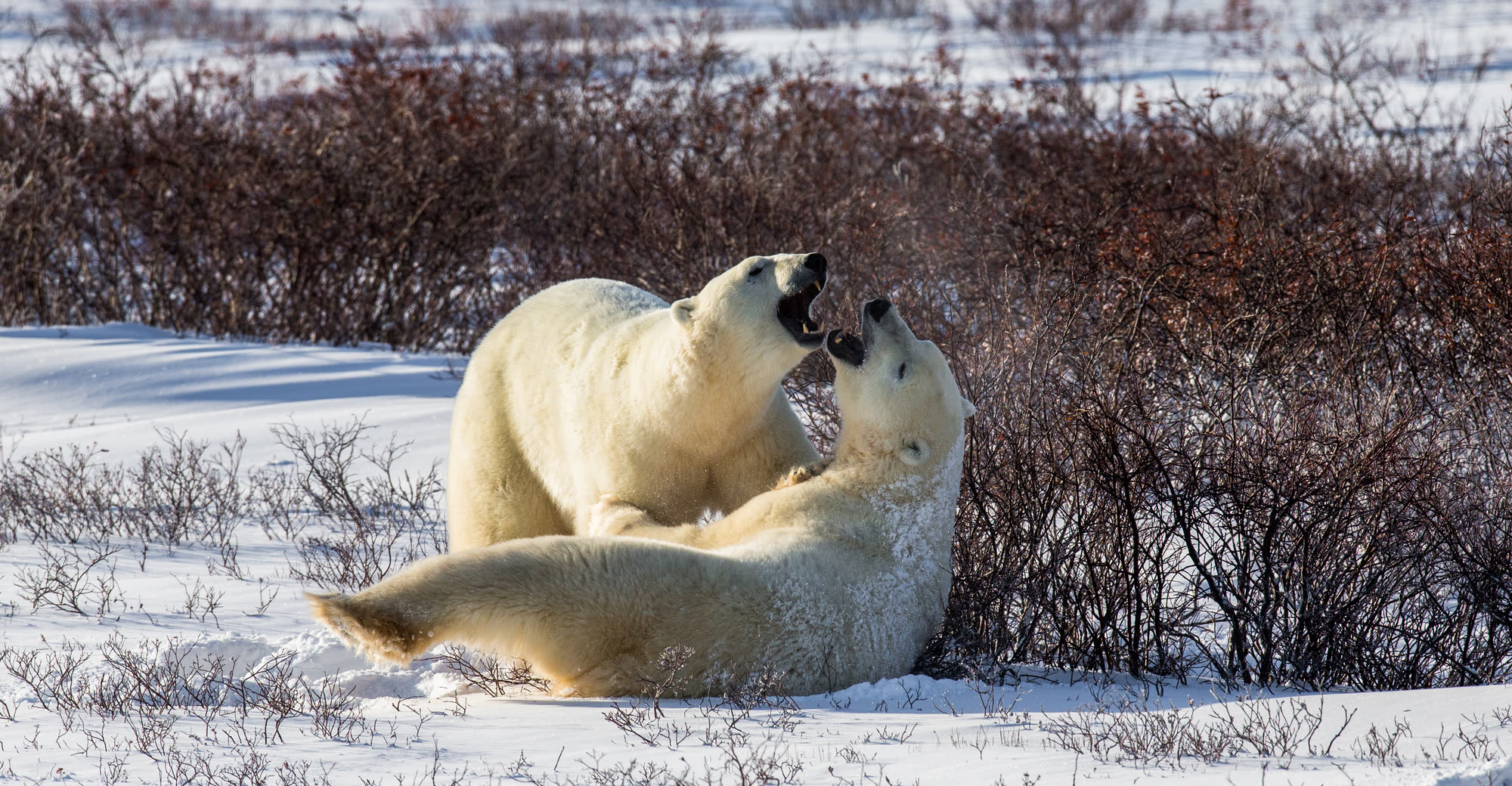
Indigenous communities have lived with polar bears for centuries and know their behaviour well. In Nunavut (Canada), this knowledge feeds into decisions on quotas and population monitoring alongside scientific data. This is called co-management, that is, joint management. The parties to the Oslo Agreement also include Indigenous and traditional knowledge in their work.
This makes sense because hunters have observations from many years that appear in no survey, for example on the body condition and whereabouts of the animals.
Gaps
What is not (yet) known
10 of 20
subpopulations without enough data for a trend
2016
year of the last global population estimate by the IUCN PBSG
22,000–31,000
likely range of the global population
More data mean better decisions. That is why long-term monitoring and cooperation across national borders are central concerns of polar bear research. The Circumpolar Action Plan sets a joint count around the North Pole as a goal; first preparatory work has been done.
Learn more
Where you can read for yourself
Note
The organisation Polar Bears International provides on its website, among other things, the “Bear Tracker”, which shows the movements of animals with tracking collars. The IUCN Polar Bear Specialist Group also publishes status reports regularly.
Keep reading
You may also be interested in
Climate change and sea ice
Measurements, projections and what the ice means for polar bears.
Arctic habitat
Where polar bears live and how their population is spread across 20 subpopulations.